 431-813-2200

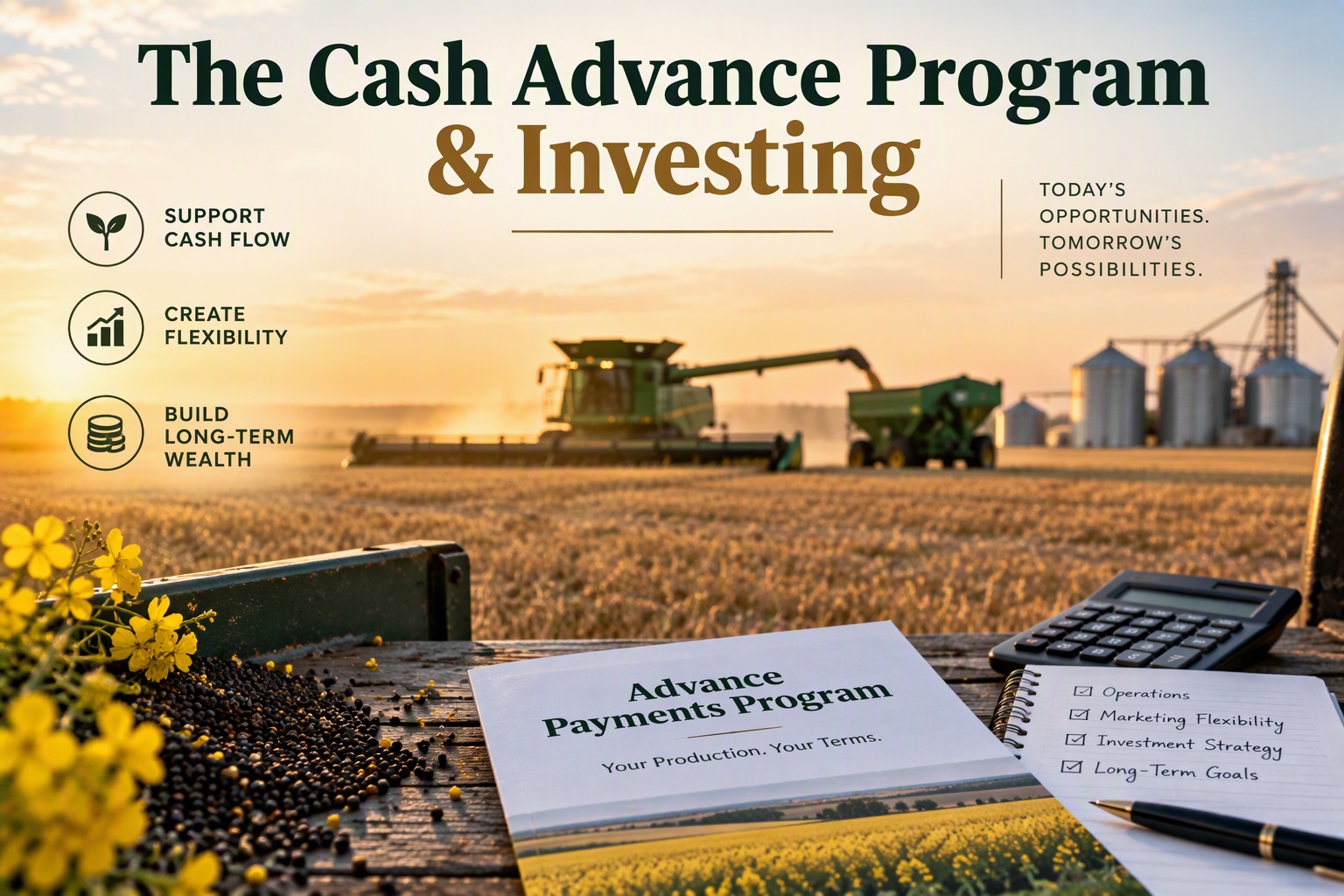
After harvest, many farmers are deciding how much cash needs to stay available for the operation and how much could be directed toward longer-term goals. One tool worth understanding as part of that conversation is the Advance Payments Program.
What if better use of your farm’s short-term financing could allow more of your own capital to stay invested for the long term?
The Advance Payments Program is a federal loan-guarantee program designed to give Canadian farmers access to low-cost cash advances and greater flexibility around when they market eligible commodities. For 2026, eligible producers can access up to one million dollars in total advances, and for canola specifically, the first five hundred thousand dollars can be interest-free. Advances are generally repaid as the agricultural product is sold.
Now, I’m not suggesting borrowing through the program and simply putting the borrowed money into the stock market. The program has eligibility, security and repayment requirements, and its purpose is to support farm cash flow and marketing flexibility.
But here’s where financial planning gets interesting.
If the advance is appropriately being used to fund eligible short-term farm cash-flow needs, could that mean some of your existing farm capital doesn’t have to be pulled away from a long-term investment strategy?
For example, a farm may have corporate cash or an off-farm portfolio earmarked for retirement, succession, or future family goals.
Instead of continually interrupting that long-term plan to cover short-term operating needs, the farm can evaluate whether the Advance Payments Program belongs in its overall liquidity strategy.
That’s an important distinction.
You’re not investing simply because financing is available. You’re coordinating operating capital and long-term capital so each dollar has a specific job.And remember, investing creates market risk while the advance still has to be repaid.
If you’re eligible for the Cash Advance Program, don’t look at it in isolation. Talk with your accountant and financial advisor about how your operating capital, corporate cash and long-term investments can work together.
Another area I’m talking about with clients is a strong harvest isn’t just an opportunity to spend more. It may be your best opportunity to prepare for the next difficult year.
One year you might have strong yields, good pricing and healthy margins. The next year might bring drought, lower commodity prices, higher inputs or unexpected repairs.
That’s why, after harvest, I like farm families to ask a simple question:
If next year is significantly worse than this year, how much financial breathing room do we have?
That starts with understanding your liquidity.
How much cash should remain available? How much room is available on the operating line? What major expenses are coming next year? And how many months could the operation continue comfortably if margins suddenly tightened? The mistake is assuming every surplus dollar needs to be spent before year-end.
Sometimes one of the most valuable things a profitable year can create is simply options.
A healthy reserve can give you time to market grain rather than being forced to sell. It can help you manage an unexpected repair without immediately adding debt. And it can put you in a position to act when land or another opportunity becomes available.
The objective isn’t having the biggest cash balance possible. It’s knowing how much liquidity your farm actually needs and giving the rest of your capital a clear purpose.
Before deciding what to do with this year’s profits, ask yourself one question: If next year is difficult, will I be glad I made this decision?